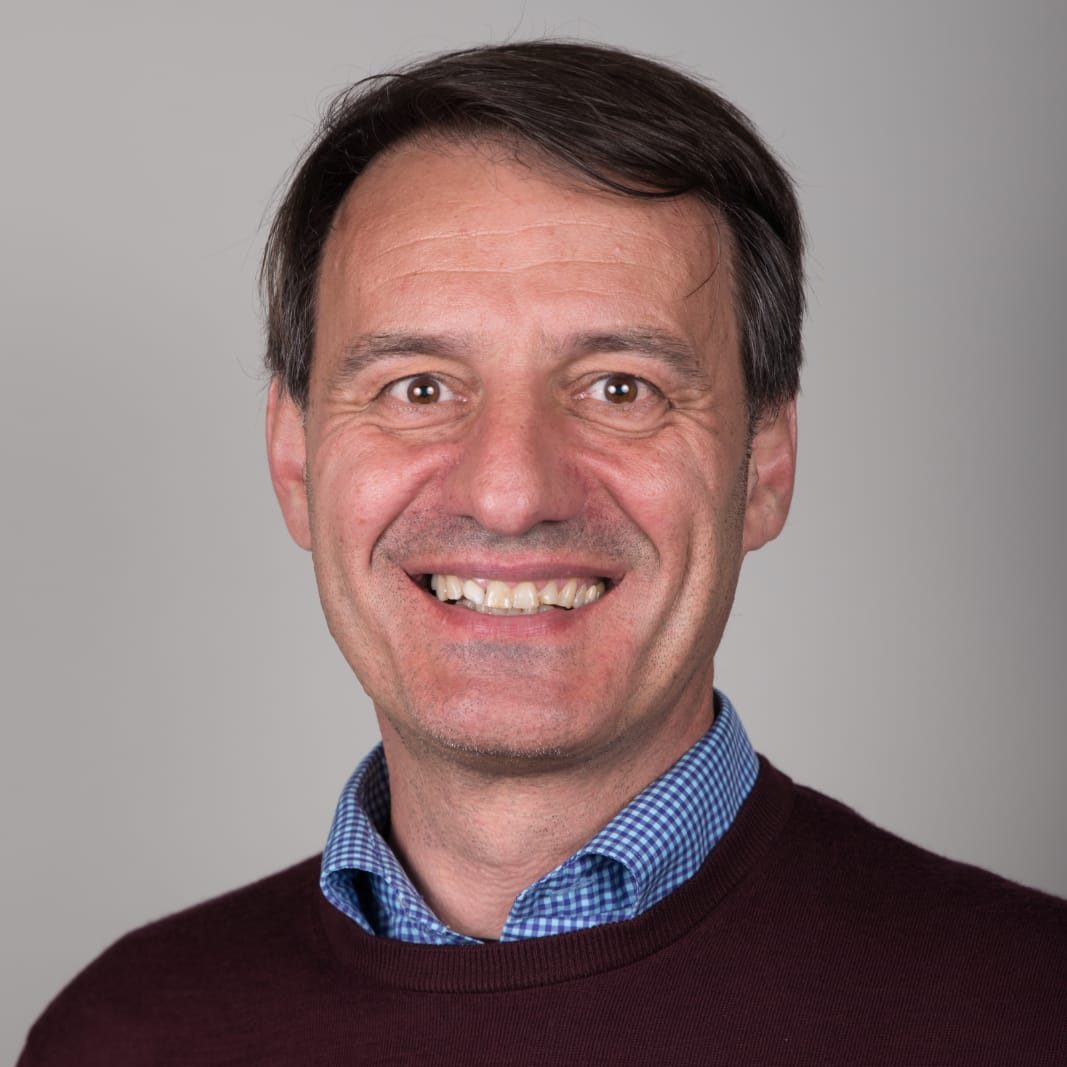
Gabriele knows his target audience is made of people who are passionate about food, sensitive to animal welfare, and willing to pay for the “truth” behind their food. But reaching them is an uphill climb steeper than any trail in Valtellina.
Franco Folini
Edolo is a small town in Valcamonica at the base of the beautiful Mount Adamello. The town is sitting on a fork in the road. To the east, the road leads to Passo Tonale and the Trentino valley; to the west, it climbs to the Aprica Pass and descends to the Valtellina Valley. It is the perfect backdrop for the Università della Montagna (UniMont). Here, in this specialized hub of the Università degli Studi di Milano, nestled in the heart of Valcamonica, we don’t just talk about sustainability as a buzzword; we breathe it.
As an adjunct professor for the Master’s program in “Valorization and Sustainable Development of Mountain Areas,” I often find myself balancing two worlds. On one hand, I teach Web Communication, a field defined by rapid-fire algorithms, pixels, and global connectivity. On the other hand, our classroom is rooted in the “High Ground”, a territory where we measure success by the health of the soil and the resilience of the community.
Today’s session was the most vital of the semester. I didn’t want to talk about SEO or social media metrics in a vacuum. I wanted my students to feel the weight of a producer’s hands, hands that work the land before they ever touch a smartphone. To bridge that gap, I invited my friend Gabriele Colombini, the soul behind Fattoria al Dos, to step into our lecture hall.

The Man from the Mountain: Gabriele’s Story
Gabriele is not your typical “guest speaker.” He didn’t arrive with a glossy corporate deck or a rehearsed elevator pitch. He arrived with the quiet, sturdy confidence of someone who spends his days in high-altitude pastures.
Fattoria al Dos is more than just a local organic farm; it is a manifesto in practice. Located right here in our mountains, Gabriele raises goats and produces organic cheese. But to say he “makes cheese” is like saying Michelangelo “chipped at some rocks.” What Gabriele produces is a physical manifestation of the Valtellina landscape.
During his presentation, the room went silent. It wasn’t the silence of boredom; it was the silence of intense fascination. He spoke about:
- The Ethical Mandate: The uncompromising respect for the natural cycles of his animals.
- The Land: Maintaining pastures that aren’t just “organic” by certification, but “natural” by conviction.
- The Product: Cheeses that carry the flavor of specific grasses and seasons, products that cannot be replicated by industrial means.
However, the core of his visit wasn’t just to showcase success. It was to lay bare the communication chasm that many small Alpine producers face. Gabriele is a master of his craft, but he is facing a difficult challenge: How do you translate the scent of a mountain pasture and the integrity of a slow-aging process into the digital language of a distracted consumer?
Gabriele and Fattoria al Dos are facing a difficult challenge: how to translate the scent of a mountain pasture and the integrity of a slow-aging process into the digital language of a distracted consumer?
Franco Folini

The Struggle for “Structural Honesty”
Gabriele was candid about his challenges. He knows his target audience exists, people who are passionate, sensitive to animal welfare, and willing to pay for the “truth” behind their food. But reaching them is an uphill climb steeper than any trail in Valtellina.
He spoke about the difficulty of competing in a marketplace flooded with “greenwashing.” When every supermarket brand uses a picture of a mountain on their label, how does a truly organic, small-scale producer like Fattoria al Dos stand out? How does he communicate structural honesty, a business model where transparency isn’t a marketing tactic, but a foundation, without sounding like just another voice in the digital noise?
The students were hooked. For them, this wasn’t an abstract case study from a textbook printed in London or Milan. This was Gabriele; this was the farm they could see if they drove a few kilometers up the road.
The Challenge: Two Hours to Change a Business
Once Gabriele concluded his presentation and answered a flurry of questions, I checked the clock. We had roughly two hours left in the session.
“Now,” I told the class, “it’s your turn. Gabriele has given you his truth. You have his challenges. You have 120 minutes to draft a communication plan that brings Fattoria al Dos to the right tables without losing its soul.”
I watched them break into two groups. The energy in the room shifted from passive listening to active, frantic creation. This is where the magic of UniMont happens, where theory meets practice. They had to consider:
- Awareness: How do we make sure the “sensitive buyer” even knows Fattoria al Dos exists?
- Perception: How do we communicate that this cheese isn’t just food, but a piece of preserved Alpine culture?
- Conversion: How do we bridge the gap between a “like” on Instagram and a purchase at the farm or a local boutique?
The Results: Naivety Meets Brilliance
When the two hours were up and the groups began to present, I felt a familiar sense of pride.
Because we are at the beginning of the course, some ideas were, predictably, a bit naive. Some students suggested solutions that don’t align with the lean, manual-labor reality of a mostly one-man organic farm.
However, the majority of the proposals were remarkably on target. Several student groups tapped into the concept I call “The Glass Farm.” They proposed a communication strategy built on radical transparency: live-streaming (in a low-fi, authentic way) the goats’ daily life, or creating a “Seasonality Calendar” that explains why certain cheeses aren’t available year-round because the goats are resting.
Other brilliant suggestions included:
- The “Terroir” Narrative: Moving away from selling “cheese” and instead selling “Valtellina’s Biodiversity.”
- Micro-Community Building: Using digital and non-digital platforms not to reach “everyone,” but to create a “Guild of Supporters” who get first access to limited-run batches.
- The Educational Loop: Creating long and short, punchy content that debunks the myths of industrial “mountain” cheese compared to the organic reality of Fattoria al Dos.
The Takeaway: Integrity as a Brand

What moved me most was how the students respected Gabriele’s core values. Not one group suggested he “industrialize” or “simplify” his process to make it more marketable. They understood that his refusal to compromise is his greatest market advantage.
The communication plans they submitted weren’t just about selling a product; they were about protecting a way of life. They realized that in the world of Web Communication, the most powerful tool isn’t a flashy filter, it’s the truth.
When I show Gabriele the students’ documentation, with their ideas, I expect he will look at it with interest as a source of inspiration. He will see his own business through the eyes of twenty-somethings who want what he is making but need him to meet them halfway in the digital forest.
Final Thoughts
Today reminded me why I teach at UniMont. We are at a crossroads where tradition must learn the language of the future to survive. Gabriele and his goats are doing the hard work of maintaining the mountains. My students are learning the hard work of making sure the world notices.
Today reminded me why I teach at UniMont. We are at a crossroads where tradition must learn the language of the future to survive.
Franco Folini

Visit Fattoria al Dos and taste their goat cheese
Fattoria al Dos is a hidden gem in the Valtellina valley, but it needs some assistance to become more resilient. If Gabriele implements even a few of the ideas the students generated today, he will likely be one step closer to attracting the passionate buyers he seeks.
If you live nearby, I sincerely recommend checking the Fattoria’s website, where you can purchase some of their products or book a visit to the farm.