Article published in October 2008 on the Novedge blog.
With the recent release of Vectorworks 2009, Nemetschek NA made an important change to the product architecture with implications expected to extend well beyond this release. They replaced their obsolete geometric software library with a powerful, reliable, state-of-the-art geometric engine: Parasolid. While geometric engines have been widely used in mechanical CAD for at least two decades, the vast majority of AEC systems are based on simpler, more obsolete solid modeling technologies. This kind of decision requires clear vision, a brave approach, and a leadership that few players in the AEC market possess. Given my MCAD background, I can fully support Nemetschek’s choice and strategy. To explore the complex implications of such a change and Nemetschek’s future plans for its flagship product, Vectorworks, I interviewed Biplab Sarkar, the company’s CTO.
The interview with Biplab Sarkar
Franco Folini: Hi, Biplab! Can you tell us a bit about yourself and your role at Nemetschek NA?
Biplab Sarkar: I joined the company in 2000, just after it had been acquired by Nemetschek AG. My background was primarily in MCAD at the time, with about 10 years of experience developing several products at ICEM Systems (ICEM DDN), Intergraph (Solid Edge), and Computervision/Parametric Technology (Pro/Desktop).
Initially, my responsibility was to enhance the modeling and rendering capability in the Vectorworks product line as a manager of the 3D geometry and rendering teams. Subsequently, I oversaw the design and development of several other areas of the product, including presentation and drafting. I was recently appointed Chief Technology Officer of Nemetschek NA, responsible for development, documentation, and QA.
Recently, I was appointed Chief Technology Officer of Nemetschek NA.
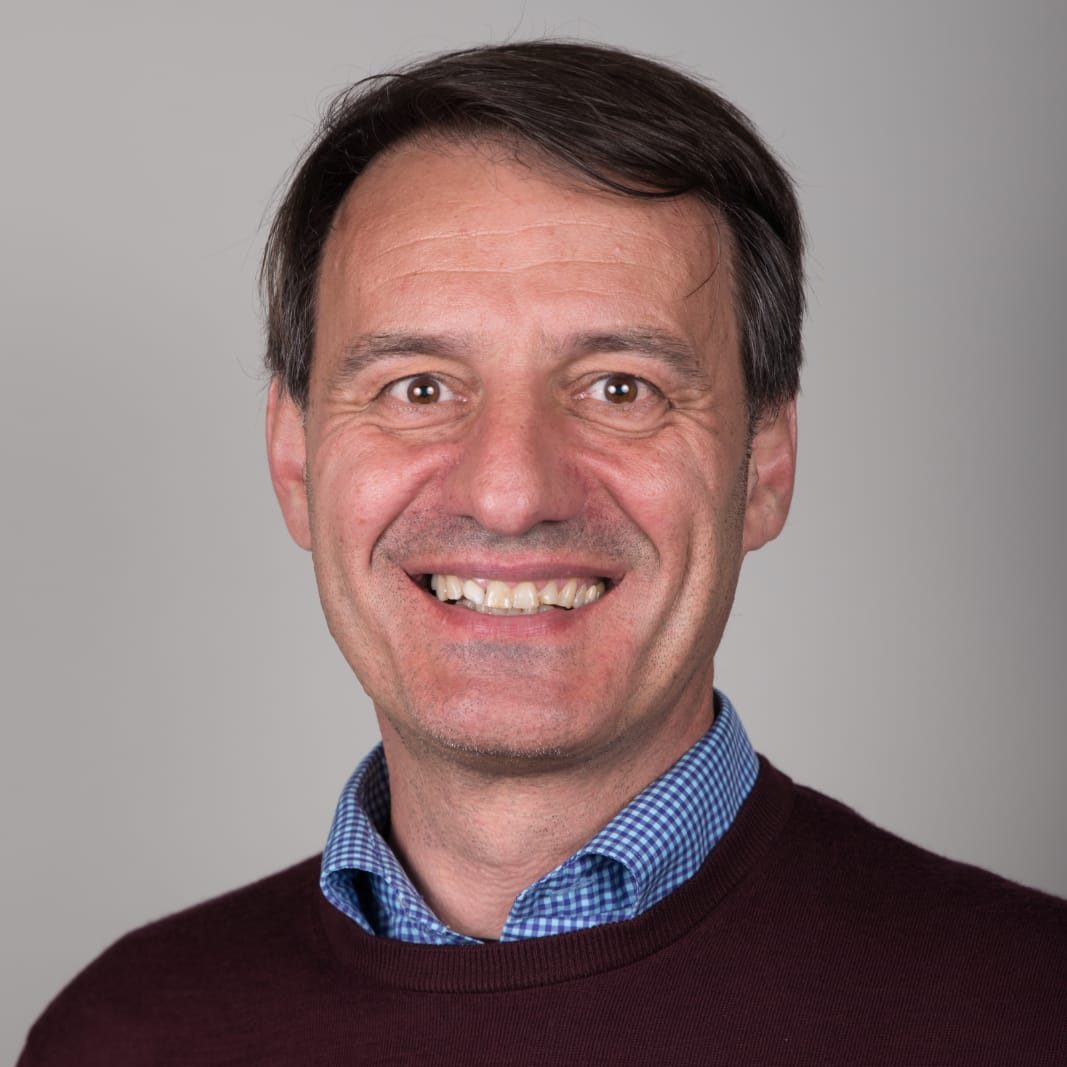
Biplab Sarkar
Franco Folini: Vectorworks 2009 adopted Parasolid as the geometric kernel. What was your experience with the transition process going from the previous geometrics system to Parasolid?
Biplab Sarkar: Vectorworks 2009 is the first phase of our transition to Parasolid. It took the 3D team about a year to implement the first phase.
The primary problem we faced was the forward translation of older files, mainly because of geometric issues; for example, the G1 continuity angle in Parasolid is different from what we used in older files, or the fact that although Parasolid supports tolerant modeling, the files from prior versions had models with very high edge tolerances, leading to intersection problems. Also, we had to focus a lot of our attention on processing the self-intersecting geometry and non-manifold conditions in our existing files. But of course, what Parasolid provides at the end of the day is performance and robustness unparalleled by any other kernel that I have used.
What Parasolid provides is performance and robustness unparalleled with any other kernel.
Biplab Sarkar
Franco Folini: Compared with MCAD, AEC systems have been slow to adopt solid modeling as a foundation. How would you explain the delay?
Biplab Sarkar: I think there are several reasons behind it. Traditionally, the geometry of most architectural objects has been planar, requiring a polygonal model, and not as complex as in the MCAD world, which requires solid models. Clash detection and accurate volume calculations are easily achieved using solid models, and we are hearing more and more about them as BIM is adopted in the AEC world.
BIM also requires model-view coordination and change-management schemes that solid models—along with constraint solvers—are quite capable of producing. As the products move more towards the building life-cycle model, the solid models would become an integral part of the modeling foundation. So the delay of solids adoption in the AEC CAD products could be attributed to lack of: (a) complexity of the models, (b) cost of implementation, and thus, cost of the CAD products, and (c) need for a single digital model across the design, construction, and maintenance phases prior to the adoption of BIM initiatives.
The geometry for most of the architectural objects has been planar, requiring a polygonal model, and not as complex as in the MCAD.
Biplab Sarkar
Franco Folini: What are the specific benefits of Parasolid compared to other geometric engines, such as ACIS?
Biplab Sarkar: Parasolid provides unsurpassed modeling quality and robustness. The quality of the kernel is never in question, as it undergoes rigorous regression testing daily. Also, the number of man-years that have gone into developing Parasolid is quite astonishing, much more than what has gone into developing ACIS.
Another aspect that I must mention is the customer support, which is superb; the responsiveness of the whole support team is commendable. And in my opinion, the modeling operations in Parasolid are much more powerful, especially in exploring “what if” conditions, doing extreme modeling, or in handling drastic topology change conditions, where you can end up with a topology quite different from what you started with.
The number of man-years that has gone into developing Parasolid is quite astonishing.
Biplab Sarkar
Franco Folini: What are the limitations and benefits of developing a complex software such as Vectorworks for both Windows and Mac platforms?
Biplab Sarkar: The benefit of developing Vectorworks on both platforms is freedom of design; users can select the operating system of their choice. The Mac platform, in particular, has a very strong appeal within the product design community.
Some of the problems we face include OS-specific behaviors from third-party systems like OpenGL libraries, imaging systems like Quartz (on Mac) and GDI+ (on Windows), and printing issues due to OS-specific driver implementations. In addition, the maintenance of platform-specific subsystems such as the user interface, event handling, and file formats requires regular attention. We are occasionally limited because a specific functionality can be implemented on one platform but not on the other for technical reasons.
The maintenance of platform specific subsystems like user interface, event handling, file formats, etc. needs regular attention.
Biplab Sarkar
Franco Folini: How much of the design of a new version of Vectorworks is based on user feedback versus the company’s vision?
Biplab Sarkar: Up until a few years ago, most of the new features were driven by user feedback. We were reacting to customer wishes and suggestions on a regular basis. Since then, we have taken a more theme-based approach to product development. Internally, we have developed several major theme areas aligned with the company’s vision for where we want the product to be in the long run.
We have been working on at least two of the major themes in every Vectorworks release. Having said that, we still provide a number of usability features in every release as a result of direct customer feedback.
We have developed a number of major theme areas according to the company’s vision on where we want the product to be in the long run.
Biplab Sarkar
Franco Folini: While the CAD market seems to be reorienting itself toward a direct-modeling/explicit approach, Nemetschek is announcing plans to implement the parametric approach in the next major release. Why has Nemetschek chosen parametric over direct modeling?
Biplab Sarkar: The direct-modeling approach is winning the hearts of CAD users in the MCAD arena, as it vastly increases design freedom when compared to history-driven CAD systems. And I think that after 20 years (since Pro/Engineer was introduced in 1988), we are seeing a paradigm shift, in a sense.
What these explicit or direct-modeling systems provide is a way to design parts without retaining the history while maintaining some of the parametric relationships of the model; this is true of many systems, including the synchronous technology introduced by Siemens/UGS in Solid Edge. The constraint-driven relationships among model elements are essential for inferring design intent and for performing design changes. So, we think the parametric approach is key for enhancing the BIM workflow in Vectorworks.
We think the parametric approach is key for enhancing the BIM workflow in Vectorworks.
Biplab Sarkar
Franco Folini: The parametric approach aligns well with mechanical design by matching design features (e.g., fillets, holes, extrusions) to 3D solid modeling operations. Can the same be said for architects and landscape designers?
Biplab Sarkar: The way we think about the architectural model is similar to the assembly of parts in an MCAD system. You have the floor plan, consisting of a network of walls constrained to one another, similar to sketches on a working plane for an extrude. Once the walls are created, you can insert doors and windows in them—essentially creating cutouts or holes.
You could also add other projections or niches to the walls, similar to additive or subtractive features on the top of the initial extrude. Once the model is designed for one story, it can be constrained to the floor or ceiling of other stories of the building, similar to constraints between mechanical parts in an assembly. In Vectorworks 2009, the wall creation and window/door insertion processes are entirely based on Parasolid solid models, very similar to an extrude with holes along the side faces. So, we think the architectural and landscaping designs can benefit significantly from solid modeling support.
We think that the architectural and landscaping designs can benefit a lot from solid-modeling support.
Biplab Sarkar
I would like to thank Biplab Sarkar for taking the time to answer my questions. A special thanks also to Jessie Newburn for her valuable support in putting together this interview.
More Articles with VectorWorks People

Interview with Jessie Newburn, PR Gal at Nemetschek NA
In this insightful interview, Franco Folini speaks with Jessie Newburn, the “PR Gal” at Nemetschek North America. They explore the evolving role of public relations in the CAD industry, discussing how authentic communication and social media engagement help humanize a software brand and build lasting relationships with the design community.

An Interview with Sean Flaherty, CEO of Nemetschek NA (VectorWorks)
My interview with Sean Flaherty, the CEO of Nemetschek North America, the American branch of Nemetschek AG, the German company that is well known worldwide for products like VectorWorks and Allplan.