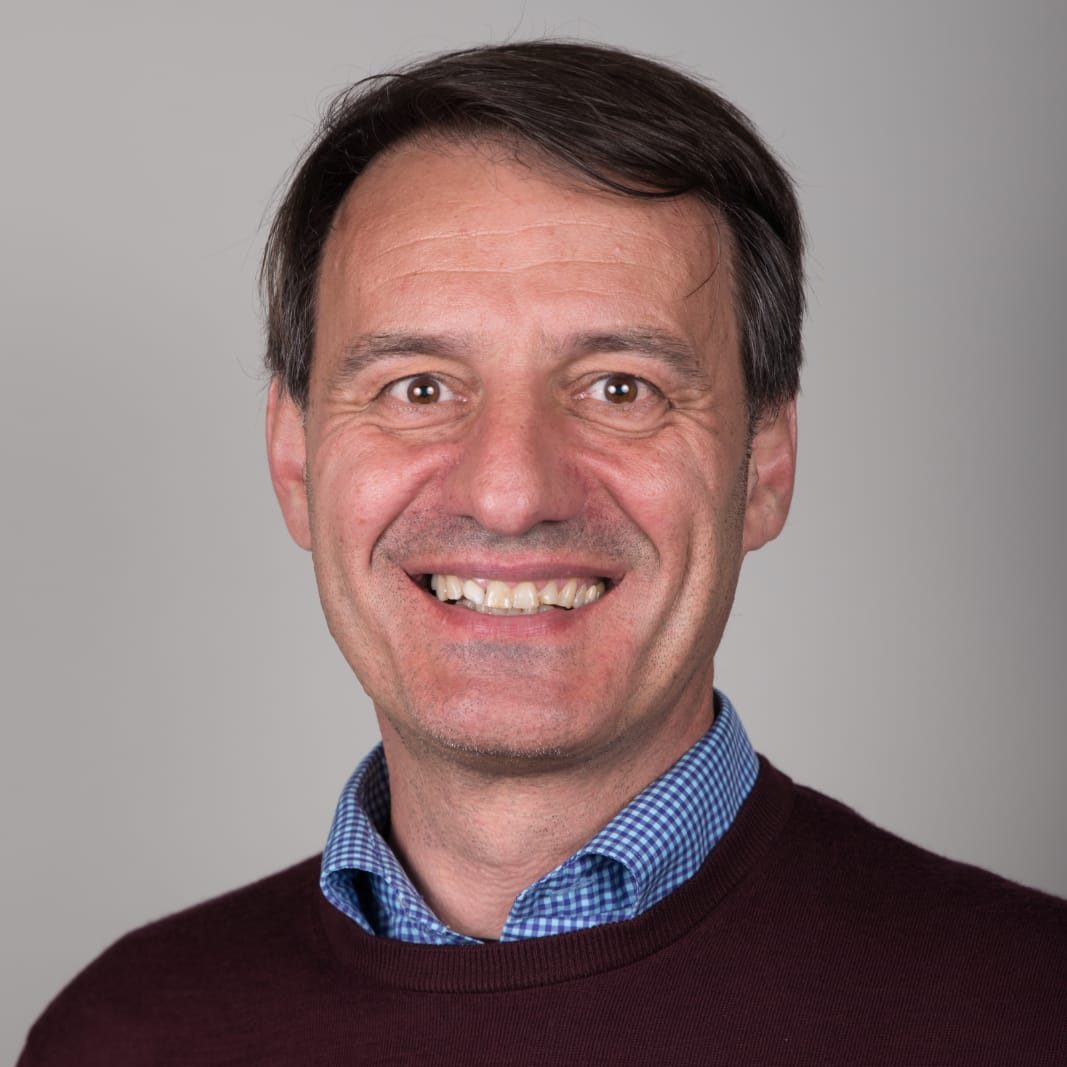
Article posted in October 2007 on the BAIA blog.
Massimo Scognamiglio is the founder and CEO of D-Helix, a new biotech company based in San Francisco with strong roots in Italy. Massimo is approaching business with an angle that is quite unusual in Italy: he is trying to combine the best academic resources with a solid business structure and plan. While Silicon Valley’s success is based on this kind of connection, in the Italian business landscape, Massimo Scognamiglio remains an exception. To learn more about Massimo’s entrepreneurial adventure, I invited him to an interview. Enjoy!
The most important part of life is curiosity. When it doesn’t kill the cat, it’s an extraordinary source of knowledge that you first learn as a little kid.
Massimo Scognamiglio
The interview with Massimo Scognamiglio
Franco Folini: Ciao, Massimo! Can you tell us a bit about yourself and your company, D-Helix?
Massimo Scognamiglio: In my opinion, the most important part of life is curiosity. When it doesn’t kill the cat. It is an extraordinary source of knowledge that you first learn as a little kid. And if you can retain that curiosity, it can become the most important source of knowledge. Obviously, that’s not enough – you also need to study and have some luck. My curiosity led me to try to understand the mechanism that governs the world around us. I guess “curiosity” is part of my DNA. However, what explains my actions best is the concept of multitasking: my life is multitasking. Everybody knows that you have only one life to share with your friends, your love, your society, and your professional life… so for this reason, you can’t sleep too much, and you have to live your life to the fullest. And the most important part of that life is to maintain your integrity.
Talking about my company, it’s difficult to start a biotech company, but it’s possible if you can see the business opportunity. I have this opportunity, and I turned it into reality, much the same way I did with my first venture. In 1996, I founded a multimedia company in Italy at a time when the market was not quite ready, even for the concept of the internet. However, I was successful in convincing the market. It also gave me the opportunity to grow as an entrepreneur. I understood that you have to risk your own money, your stable job, the most precious years of your life, and all your passion. In 2000, I sold my first company (xmedia) to the most important media group in Italy. Years later, here I am in California.
D-Helix, my company, was incorporated in San Francisco in April, 2006. It’s a project to bridge academic discoveries and industry. We don’t realize how many great discoveries never see the light of day because they are hidden in universities. Our company’s main business is to fill this gap by sponsoring early-stage research in many biotech areas. Even though the risk is greater, so is the payoff. At the same time, we think that we are on an important mission for society: transforming these groundbreaking technologies for the real world.
Franco Folini: With your company, you are also building a business bridge between Italy and California. Can you explain the reason behind this choice?
Massimo Scognamiglio: Italy is so beautiful, the perfect place to live, but it’s not the right place to be an entrepreneur. California is the perfect place to start up a global company based on a global network between universities and research labs all around the world, between United States, Spain and Japan.
Italy is so beautiful, the perfect place to live, but it’s not the right place to be an entrepreneur.
Massimo Scognamiglio
Franco Folini: San Francisco, Silicon Valley, and the Bay Area are becoming key places for the biotech industry. How favorable is the business environment in Italy for biotech startups?
Massimo Scognamiglio: As I said before, Italy, today, is not a simple place to work like entrepreneur, and the university research environment is even worst: we have some great universities and great scientists but absolutely no entrepreneurial culture… for too many years (and probably also today) research has been considered a loss of money and not a gasoline for new companies and for the Country.
Franco Folini: Starting a company is difficult. Based on your experience, what are the most common errors new entrepreneurs should avoid?
Massimo Scognamiglio: The one billion dollar question… the first answer that comes to mind is avoid arriving too soon: you risk not being understood, and you must have a “marketable idea.” The second error is to choose bad associates: do not trust from the very beginning, build trust day by day… You must remember that even the greatest idea needs a great team and great marketing to reach the market. For these reasons, I believe that D-Helix could be a winner: biotechnology is becoming more mature on both the business and scientific sides, and, at the same time, our associates are strongly committed to the company. When I present my company to an audience, I emphasize not only the business/scientific side but also my spirit, my vision, my very personal way of seeing the world, and my commitment.
The first, most common error new entrepreneurs should avoid is starting too soon. You risk not being understood. The second error is choosing bad associates: do not trust them from the start; build trust day by day.
Massimo Scognamiglio
Franco Folini: You are a strong supporter of the connection between academia and business. How do you manage the bureaucracy of the Italian academia in a way that makes sense from the business point of view?
Massimo Scognamiglio: We are currently working in the United States. D-Helix is active in scouting, acquiring, developing, and commercializing groundbreaking intellectual property licensed from a number of universities and research institutes in particular areas of biotechnology (with current focus on environmental stress plant tolerance, biofuels, and antiviral treatment possibilities) The company’s business model is represented by an independent innovative platform (made of a strong research world wide network of leading scientists with a deep pipeline of development), able to accelerate the research value creation time to market and reduce related direct costs. We will soon begin collaborating with some Italian universities, so wish us good luck! The bureaucracy is awful, and it remains one of the most significant challenges when working with universities. You can’t manage bureaucracy. If you are a very lucky boy, you can just survive bureaucracy!
Franco Folini: Fundraising is one of the most critical steps for new entrepreneurs. Any recommendations?
Massimo Scognamiglio: A very good Business Plan, a short Time to Market, and a clear competitive advantage. Then great imagination and luck.
Franco Folini: BAIA plans to promote the Silicon Valley open approach to business networking in Italy. What will Italians have to change in order to fully benefit from those types of social relationships?
Massimo Scognamiglio: The network is the most important issue, more than the money. In Italy, the network is always closed; you can’t talk directly to anyone. The Californian way is the opposite: it’s not a matter of friendship, it’s just business.
I would like to thank Massimo Scognamiglio for taking the time to speak with me today.