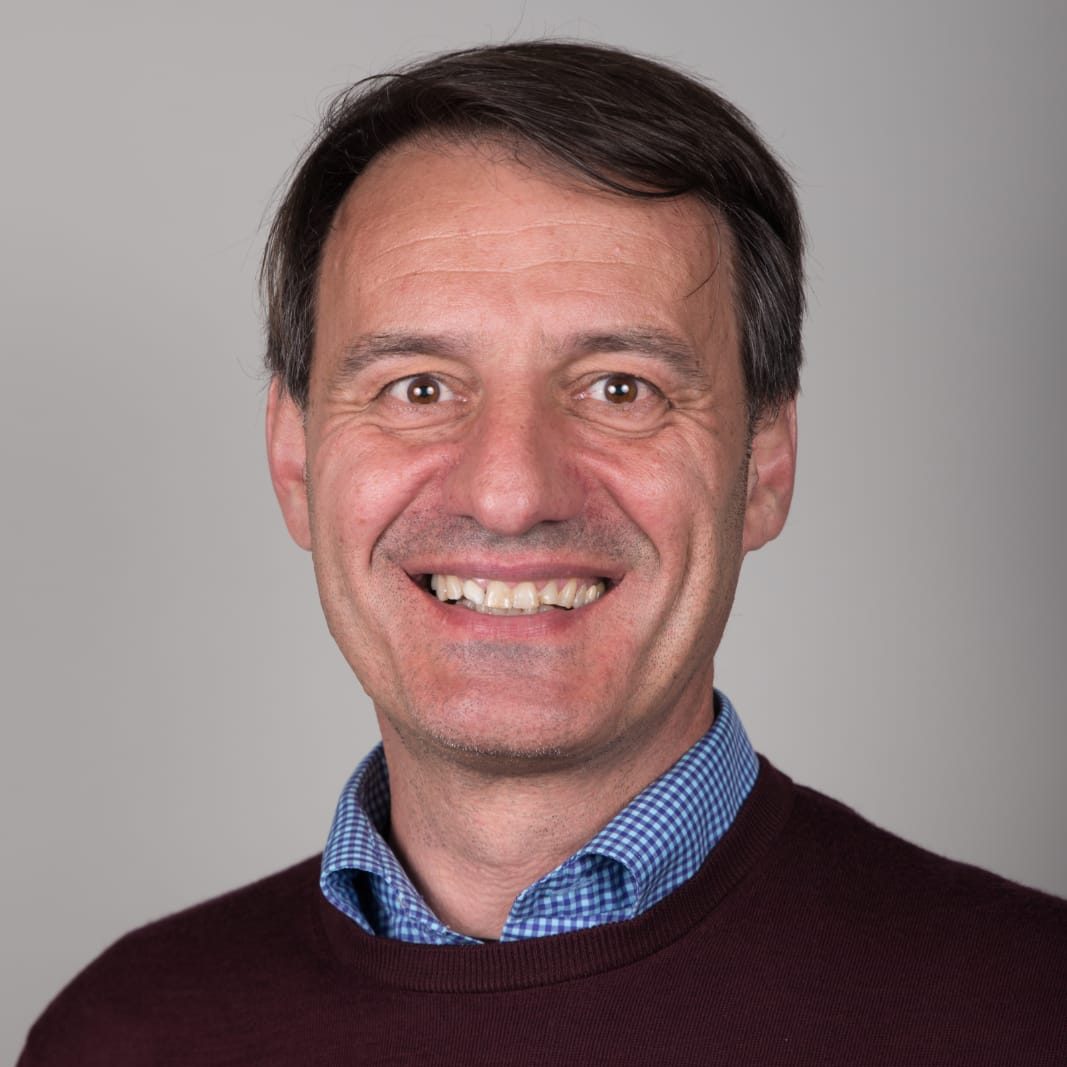
Article published in May 2007 on the Novedge blog.
Chris (Christos) Yessios is the President and CEO of auto.des.sys, Inc., and Professor Emeritus at The Ohio State University. He holds a PhD in Computer-Aided Design from Carnegie-Mellon University, and his formal education includes a BArch and a Diploma in Law, both from the Aristotelian University in Greece. He taught and conducted research at The Ohio State University, where he was a Professor of Computer-Aided Design and the Director of the Graduate Program in Computer-Aided Architectural Design.
In 1990, with David Kropp, an ex-student of his and now Senior VP of Development, Chris Yessios founded auto·des·sys, Inc., developer of the popular 3D modeling software, form.Z. Last year, Chris received the CAD Society Joe Greco Community Award.
I had the opportunity to meet Chris and other auto.des.sys folks at MacWorld in San Francisco. Considering his long experience in 3D modeling, I thought it would be interesting to know more about his company, form.Z, and to have his opinion on the evolution of 3D technologies. Here is the interview.
The interview with Chris Yessios
Franco Folini: Hi, Chris! Can you tell us a bit about yourself and your company, auto.des.sys?
Chris Yessios: I made the decision to concentrate on computer-aided design in 1969 when I enrolled in a doctoral program at Carnegie-Mellon University in Pittsburgh. After graduation, I took an academic job at The Ohio State University, where, slowly at first, but patiently, we started developing many of the techniques that are taken for granted today. Prototypical 2D drafting and 3D modeling programs were already running on mainframes at the University by the early 80s, while a few commercial turnkey systems were also making their appearance, at a very high cost, I should add. Even some early implementations of what has come to be known in the architecture field as BIM (Building Information Modeling) were already available to our students in those days. What was missing was the ability to disseminate their usage, as installations at different universities tended to be rather unique, and the professions could not afford to match them.
All this, of course, changed with the availability of the PCs. This is when our company, AutoDesSys, Inc. (standing for Automated Design Systems) was founded by an ex-student of mine and me, with a few more ex-students working with us. The year was 1989. Our goal was to bring down to the PC (the Mac, to be more exact) and disseminate advanced 3D modeling techniques that had previously run only on mainframes. About a year later, form.Z was born.
At auto.des.sys, our goal was to bring down to the PC (Mac) and disseminate advanced 3D modeling.
Chris Yessios
Franco Folini: I have a strong impression, from my interactions with your company, that auto.des.sys is like a group of friends working for other friends. I never felt an impression of dealing with a corporation. How did you manage to create such a friendly environment?
Chris Yessios: This was never planned. It just happened. Thus, I am afraid, I have no recipe to offer.
The initial group of people shared an interest in developing tools that would make their lives as designers easier and had worked together before. In the early days, we also stayed in close touch with our professional users, who provided us with constant feedback. As the company has grown in recent years, we have tried to maintain as much of this spirit as possible, even though I have to admit it is not as easy as it used to be.
Franco Folini: Form.Z started as software for architects but quickly became popular among a wider range of users. How do you serve the needs of different types of users with just one product?
Chris Yessios: It is true that our initial intention was to produce a program geared towards architectural design. We even initially used a different name that reflected this. However, we soon realized that the need for 3D modeling extended far beyond architecture, and many different design fields were ready to use more or less the same modeling tools. This is when we switched our emphasis and developed a general-purpose modeler.
There are certain modeling operations that may be considered “generic,” meaning they are useful to everyone rather than to specific design fields only. The Booleans are probably the best example of such operations. We were apparently successful in providing a fairly complete set of such generic operations that many different fields could be happy with. This was at a time (early 90s) when competing modelers were rather primitive; Form.Z had no difficulty gaining popularity fast. Even today, some of its operations (including the Booleans) remain uniquely capable and robust, which is why its popularity continues despite the availability of more modelers on the market.
Franco Folini: You are a Professor Emeritus at Ohio State University, where you taught Computer-Aided Design until 1995. How has your academic experience impacted the products created by auto.des.sys?
Chris Yessios: What I enjoyed most at the University was the research side of my duties. The ability to explore new ideas and techniques. My area of concentration was such that even my class lectures were mostly based on what we had explored and developed in the lab recently, sometimes as recently as “yesterday.” It is no different in our company. Not only have we drawn heavily on the knowledge we developed in academia, but we also work with a similar attitude, constantly striving to improve and find better ways to apply computing to design tasks.
With formZ, we are constantly trying to find better ways of applying the computer to design tasks.
Chris Yessios
Franco Folini: New users can now choose from several options when selecting a software system for 3D modeling, rendering, and animation. Which users should choose form.Z and why?
Chris Yessios: Yes, it is true: there are several 3D modelers available today that were not available not too long ago. However, it is also true that none of these modelers is exactly the same as one another. On the contrary, a number of modelers are considered complementary to one another and are used in this way. Thus, form.Z is frequently used for the modeling part of a project that is subsequently animated in another application. Needless to note that, with the recent inclusion of more animation tools in form.Z, there will be less of a need to animate with another program.
Who should choose form.Z? Anybody who is inclined to think of objects as being objects and who expects them to behave like objects when they are operated on. This contrasts with the process-based modeling implemented in programs geared mostly towards animation. Also, anybody who wants to explore new forms and designs, or who may wish to start with concepts and carry them all the way to detailed designs, automatic fabrication, and beyond. form.Z seems to possess an uncanny ability to go beyond what other modelers can take a user. It can routinely turn a 3D experience into a creative process that produces results far beyond what is possible with conventional means.
Franco Folini: Since its appearance, 3D modeling software has continually evolved to become easier to use and more powerful. Apart from this major trend, what will be the next big step?
Chris Yessios: Intelligent behavior. Over the years, we have discussed how knowledge-based design can lead to design automation and intelligent structures, both architectural and at smaller scales. Much of this will be based on the continuously increasing power of computers (speed and storage capacity), which are already at levels unthinkable just a couple of decades ago. We are finally coming to the point when we shall be able to capitalize on all this power.
I would like to thank Chris Yessios for taking the time to speak with me today.
The Yessios Museum
In an inspiring update to his lifelong journey of creation and dedication, Chris (Christos) Yessios has founded The Yessios Museum “The Makedonikos Agonas and Edessa”.
Located right in the heart of his native city of Edessa, Greece, the museum officially began its operations on October 18, 2024, a date carefully chosen to coincide with the anniversary of the liberation of Edessa. Housed in a beautifully restored historic building donated by Chris himself, the museum serves as a modern cultural and educational space dedicated to commemorating the Macedonian Struggle and highlighting the vital contributions of the local Edessian fighters.
You can learn more about this remarkable project, plan a visit, or explore the history by visiting the official museum website at yessiosmuseum.com.